
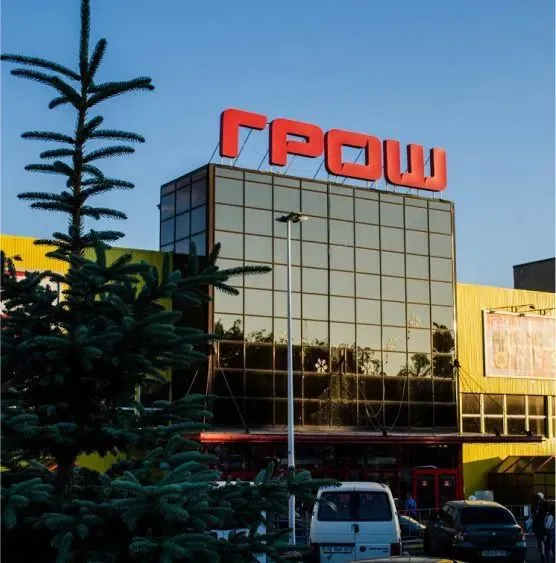
The chain has an accounting system, bookkeeping is kept separately, and orders are calculated by a separate service. Some processes have long lived outside any system: in Excel, in folders and in people. A direct “as is” migration would have preserved every workaround built up over the years.
Map first, then the target model, then the demo environment, then the price
The Discovery brief was to turn “we want Odoo” into a managed project with scope, a plan and a price. The work went in four steps, and each depends on the one before.
Nine blocks of the chain's processes
From the structure of the company group and its units to products, prices, assortment, deliveries, stock, the warehouse and in-house production. The processes are described with as-is and to-be diagrams, and the key objects are detailed down to the field level.
Integrations are described separately: with the accounting system, the POS system, 1C (the accounting and ERP system common in Eastern Europe), the auto-order service, and document exchange with counterparties (EDI).
Every clause of the agreement becomes a calculation rule
The riskiest financial block was designed down to the target model. A marketing agreement contains clauses: retro-bonus, listing, marketing budget, promo compensation, logistics bonus, advertising, extra placements. Each clause has its own type, percentage or amount, calculation base, period and list of stores. The model accounts for the fact that the marketing agreement is often signed by the brand holder and the supply agreement by the supplier. The retro-bonus is calculated on purchases for the period minus returns, and promo compensation on sales of promo items. At the end of the period, draft accrual documents are created automatically, and then the marketing act is generated.
A price from a formula, a matrix from the system
Prices are built with price lists using formulas from the supplier price and rounding rules, with separate prices for store formats. The supplier price is fixed in the agreement, and a mismatch on the invoice stops the goods receipt. For assortment we agreed a three-stage roadmap: matrices from Excel into the system, linking the matrix to auto-ordering, and planograms and photo reports in one interface.
The client sees their processes in the system
So the conversation wouldn't stay abstract, we deployed a demo database with functional components for Ukrainian retail specifics. It let us test the analysis hypotheses and show the client what they can take from standard functionality. The agreed principle: don't copy the mechanics of the old system, use standard Odoo as much as possible and customize only where there is no other way.
What is ready and what needs customizing is known before the project starts
A list of functional gaps removes the costliest risk in retail projects: finding out mid-implementation that half the scope was never accounted for. The client makes the budget decision with scope, a plan and an estimate in hand.
From a contract term to a source document
An accrual amount is always explained: the agreement clause, the actual base, the document, the source papers. The system creates the draft accruals itself, and a person only has to review them.
Documents you can take to a budget meeting
Components tested against the specifics of Ukrainian retail
The environment was assembled around the chain's needs: agreements and marketing accruals, product catalog, prices and price tags, assortment matrices, the warehouse and document exchange with counterparties. On the environment, the client saw their processes in Odoo: the first demo on March 3, and block-by-block demos in April (manufacturing, sales, inventory counts, warehouse).
Migration from the chain's current accounting system was estimated during the analysis stage.
From January to May 2026
Who this approach suits
We will show it on your company's processes
We take your process and show what standard Odoo covers and what is really worth extending.
We will get back to you promptly to agree a demo time.